Cardiology MEDIZINICUM Hamburg

Cardiology

Heart and vascular diseases are known as endemic diseases. These will be handled by a cardiologist. At Klinikum Stephansplatz in Hamburg, cardiology patients benefit from close interdisciplinary collaboration between cardiology, endocrinology, pulmonology, neurology and rheumatology.

What services can patients expect from cardiologists at MEDIZINICUM Hamburg (Klinikum Stephansplatz)? Of course, a cardiological check-up exam with comprehensive evaluation of the current state of the cardiovascular system. All non-invasive examination options are available for this purpose. In addition, the risk of myocardial infarction can be determined and, where appropriate, preventive measures discussed and taken.
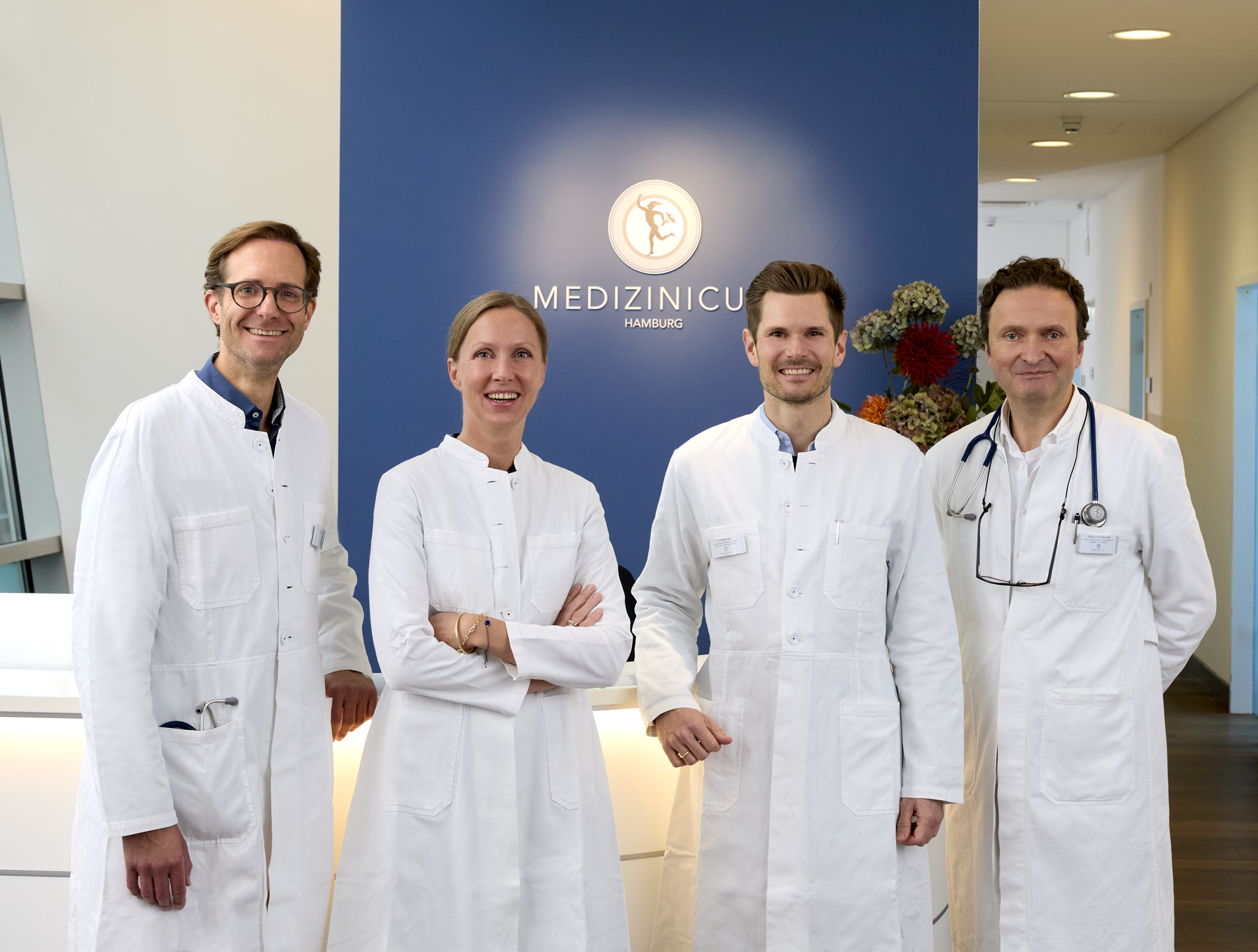
Several specialists in the field of cardiology work at our MEDIZINICUM Hamburg. Our team of over 90 experienced doctors from 30 different specialties work together on an interdisciplinary basis to take a holistic view of your symptoms and make an accurate diagnosis.

Our cardiac focus

  • Some heart pathologies are particularly difficult to assess or investigate.
  • Some heart diseases persist without being successfully treated.
  • Treating physicians do not always agree on the optimal diagnostic and/or therapeutic approach (patients obtain second opinions, but there is no agreement).
Post-COVID check at the MEDIZINICUM Hamburg

Our focus in heart diseases

  • Diagnosis and treatment of cardiac insufficiency
  • Diagnosis and therapy of cardiac arrhythmias, especially atrial fibrillation
  • Diagnosis and therapy of cardiac valvular pathologies
  • Diagnosis and treatment of cardiac involvement in other diseases (e.g., rheumatic or pulmonary pathologies, etc.)

We attach particular importance to the medical consultation in our Hamburg practice, the personal examination and the continuous care of each individual patient.

Should inpatient care be required, we can arrange direct transfer to the best specialists (for example, surgery).

Pattern of cardiac diseases

  • High blood pressure (arterial hypertension)
  • Coronary artery narrowing (coronary heart disease)
  • Weakness/shortness of breath (adynamia/dyspnea)
  • Heart muscle disease (cardiomyopathy)
  • Heart muscle disease (cardiomyopathy)
  • Heart muscle inflammation (myocarditis)
  • Heart valve inflammation (endocarditis)
  • Heart valve disease (valvular diseases)
  • High blood pressure in the pulmonary artery (pulmonary arterial hypertension)
  • Irregular heart beat (arrhythmia), atrial fibrillation
  • Dizziness/fainting/lapses in consciousness (collapse/syncope)
  • Long and short QT syndrome
  • Pacemaker clinic
  • Heartbeat clinic
  • Post-transplant care after heart and heart/lung transplantation
  • Pharmacotherapy for cardiovascular disease
Cardiology-MEDIZINICUM-Hamburg-4

Coronary heart disease (CHD) is the most common cardiological disease.
Detection, treatment and follow-up of angina pectoris, heart attacks and myocardial weakness due to infarction
Advice on sensible preventive measures (prevention) by controlling the cardiac risk factors of arteriosclerosis, especially in cases of high hereditary risk.

Heart failure is the inability of the heart to pump sufficient amounts of blood to the circulatory system. The most common symptoms of heart failure are shortness of breath, limited exercise tolerance and water retention in the body. Very different heart diseases can be the cause of heart failure, and the right therapy depends in each case on the underlying disease
Heart failure is often easily treatable: an optimal, individually adjusted drug treatment can alleviate symptoms, dramatically improve quality of life and also demonstrably increase life expectancy. However, it is important that this therapy is individually adapted with regard to the selection, combination and dosage of the medication.

  • Diagnostics of the cause of cardiac insufficiency
  • Classification of the severity of cardiac insufficiency
  • • Diagnosis of the cause of heart failure • Classification of severity of heart failure • Individualised drug therapy • Consultation regarding additional treatment options for advanced heart failure (pacemaker, defibrillator (ICD) to protect against sudden cardiac death, catheter intervention, cardiac surgery, heart transplantation, ventricular assist device)
  • Advice on additional treatment options for advanced cardiac insufficiency (pacemaker system, defibrillator (ICD) for protection against sudden cardiac death, catheter intervention, heart surgery, heart transplantation, heart support system)

There's practically no one who doesn't have cardiac arrhythmias. Usually they are completely harmless, frequently however also annoying and sometimes dangerous. Our task is to clarify which cardiac arrhythmias you have and whether there is a need for treatment.

Counselling regarding treatment options (drug therapy, implantation of a pacemaker and/or defibrillator, catheter intervention = ablation)
Initiation/adjustment of drug therapy, follow-up after pacemaker/defibrillator implantation

Many people are diagnosed with leaks or narrowing of the heart valves.
Our task is to clarify how significant these changes are and, given the abundance of treatment methods available today, to work with you to find the best way for you.

  • Diagnostics of valve diseases and assessment of their severity
  • Advice on treatment options (drug therapy, catheter intervention, heart surgery)

Inflammatory heart diseases are inflammatory processes in the heart muscle at the 3 heart walls (endocardium, myocardium, pericardium). Acute inflammatory heart disease is a dangerous disease that must be treated immediately in hospital if the fever is unclear, the performance is rapidly restricted and the heartbeat is fast. In practice, we have more to do with the late effects after undergoing endo/myocarditis or pericarditis. The correct diagnosis in the hands of the experienced clinician is important, because specific therapeutic consequences may arise.

More than half of all people over 60 have high blood pressure - mostly unnoticed. Permanently elevated blood pressure damages all vessels, especially those of the brain Kidney and heart.

  • Objectification of blood pressure regulation at rest and under stress, long-term under everyday conditions
  • Diagnostics regarding the causes
  • Advice on treatment options (individualized drug therapy, alternative therapy for side effects with existing blood pressure lowering therapy; accompanying non-drug measures, invasive measures)

Pulmonary hypertension is a collective term for diseases characterised by an increasing rise in blood pressure in the pulmonary circulation. The causes are manifold: Lung diseasesrheumatic diseases and primary heart diseases lead to pulmonary hypertension, but it can also occur as an independent disease. Disease pattern occur as an independent disease. What all forms have in common is that right heart weakness develops due to the overloading of the right part of the heart. Patients suffer from severely reduced physical performance and shortness of breath.

  • Diagnostics of lung pressure at rest and under stress,
  • Diagnostics of possible causes
  • Advice on treatment options (individualized drug therapy, alternative therapy for side effects under existing therapy; invasive measures)

Our cardiological diagnostics

  • Non-invasive cardiac diagnostics
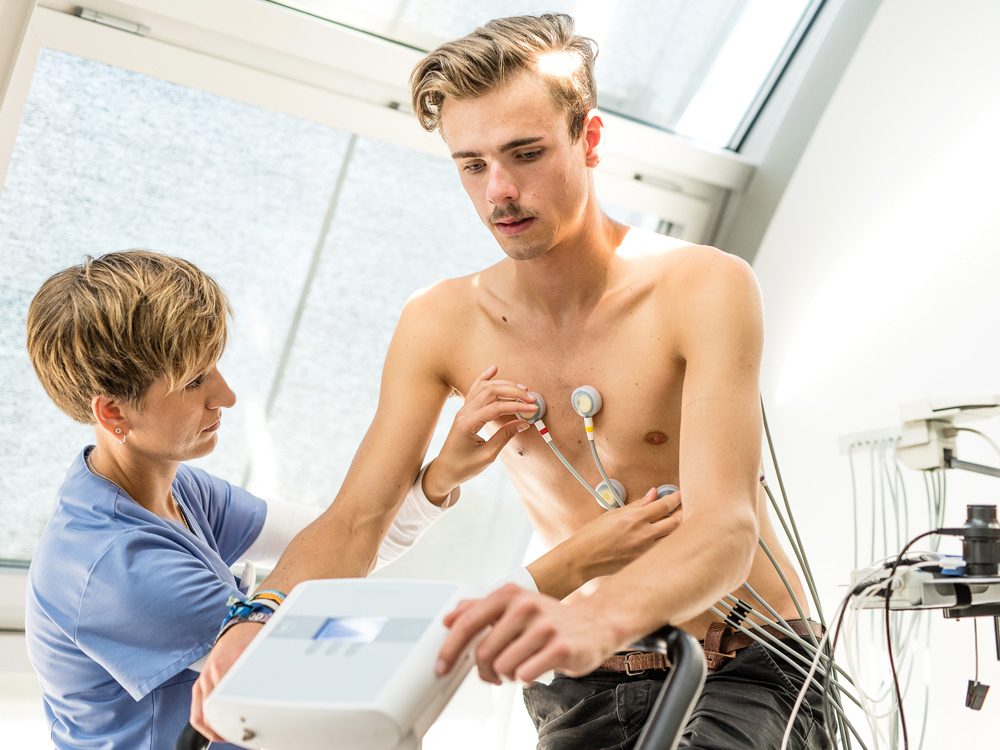
  • Resting electrocardiogram (ECG) / exercise ECG / long-term ECG
  • Echocardiography / Ultrasound examination of the heart
  • Doppler, contrast and stress echocardiography
  • Transthoracic echocardiography
  • Transesophageal Echocardiography
  • pacemaker functional diagnostics
  • Spiro ergometry as cardiopulmonary functional diagnostics
  • Duplex and double sonography of peripheral vessels
  • stress echocardiography
  • contrast echocardiography
  • tissue doppler echocardiography
  • Duplex sonography of the carotid artery and peripheral vessels
  • Long-term blood pressure
  • Defibrillator control and programming

Implantation of event recorders

The causes of sudden unconsciousness (so-called syncope) or strokes (apoplexy or so-called TIA) are often unclear. This unsettles patients, as no appropriate treatment can be given.

For these cases, "event recorders" are used: small, USB stick-like microcomputers that are inserted under local anesthesia by means of an 8mm incision under the skin and near the heart. The procedure takes no more than 10 minutes. By wireless transmission (radio or by interrogators), the physician is informed of the heart rhythm (e.g., prolonged cessation of cardiac activity, palpitations, or atrial fibrillation). After 2-3 years of continuous measurement at the latest, the event recorder is removed again and the cause can be treated. We will be happy to inform you about this diagnostic possibility.

News and current topics

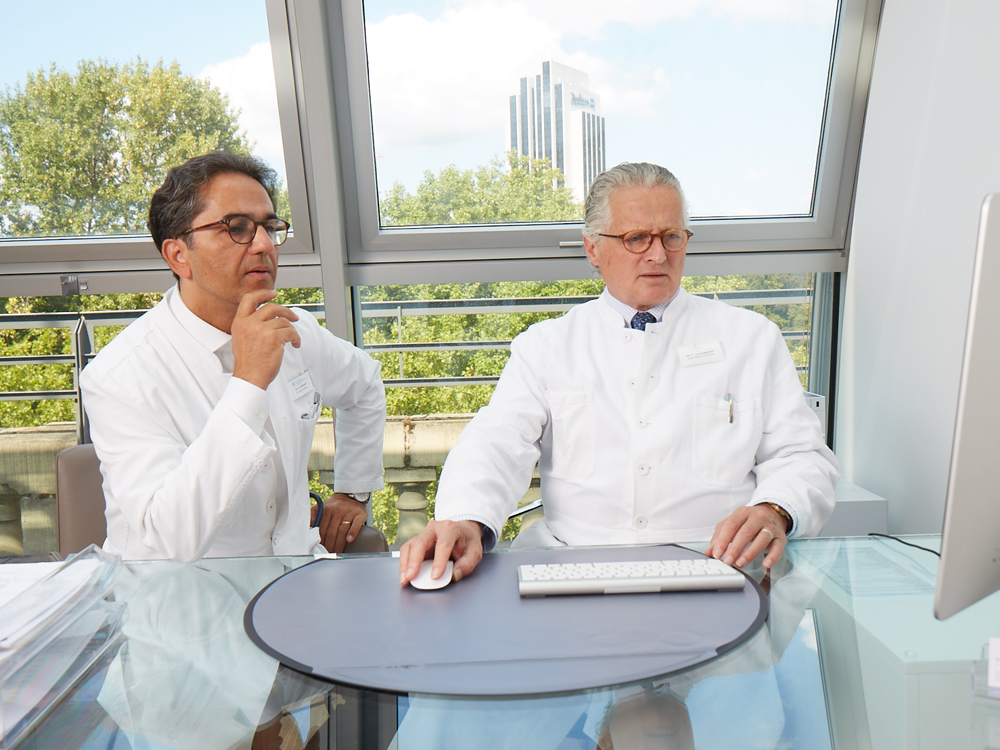
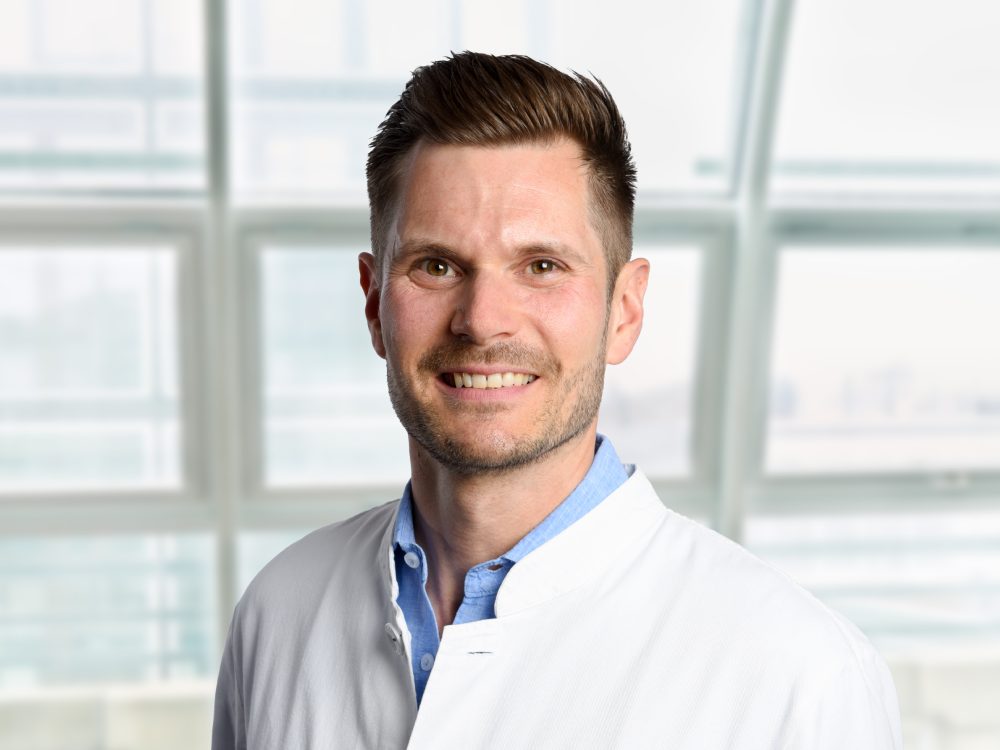
Our attending cardiologists

P. Neumann-Schniedewind, MD
Specialist in Internal Medicine,
Cardiology, Nutritional Medicine

Further information...

Susann Tessloff
Specialist in internal medicine, cardiology

Further information...

Dr. med. Matias Grez
Specialist in internal medicine, cardiology,
Sports medicine, sports cardiology

Further information...

Dr. med. Peter Kuhlencordt

Specialist in internal medicine, cardiology and vascular medicine (angiology), additional qualification in preventive medicine.

Further information...

Locations & Contact

Our locations in Hamburg

Our location in Schleswig-Holstein

x
Telephone
Radiology St. Stephen's Square Othmarschen Nienstedten Wellingsbüttel New wall Bergedorf On the Alster Fontenay Ahrensburg
Online appointment Recipe Forms